


Five Simple Tips for Improving Your Balance
Avoid Falls and Stay on Your Feet–With a Little Help from Physical Therapy
Are you worried about falling and injuring yourself? Does limited mobility due to arthritis or another condition make you feel shaky? Balance challenges can certainly be difficult, but you do have options for improving your overall balance and stability!
One of the things we do at Kleinpeter Physical Therapy is help people work on the spatial awareness and muscular strength crucial in addressing balance challenges. This is especially true for people with a high risk of falling, where improved balance could save you a trip to the hospital.
Want to learn more about the importance of good balance? Call to schedule an appointment today.
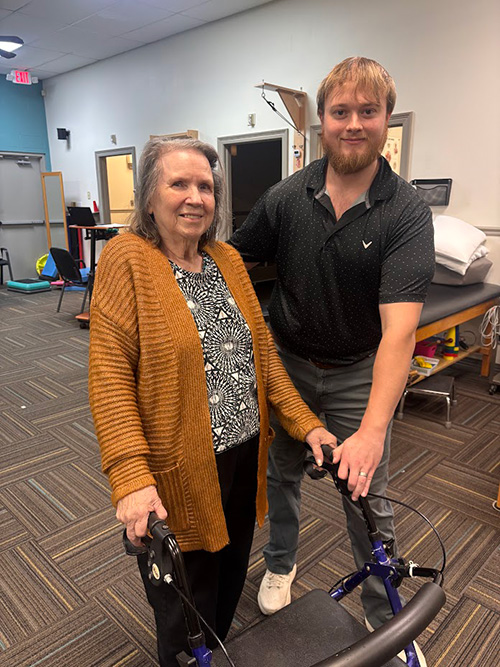
Why Should I Work on My Balance At All?
The older you get, the more important good balance becomes. Falls are one of the biggest threats to adults 65 years or older, causing millions of hospitalizations and emergency room visits every year.
While several factors contribute to this high fall risk–including age-related sensory and physical changes–you can do things to lessen your risk, and it’s never too early to get started! If you start working to improve your balance now, you’ll be in a better place as you age.
That said, there are other benefits to improving balance for younger people. A good sense of balance has a radiating effect on your overall fitness, helping to improve your posture and overall movement. You’ll be better able to catch yourself if you stumble or trip, and you might notice improvements in other physical activities, like running or playing sports.
How Can I Improve My Balance? Five Suggestions from Our Physical Therapists
1. Go for a Walk:
Sometimes, the best solutions are the simplest. Walking helps build core and lower-body strength, two crucial components of good balance, and it’s safe and effective for most people. That said, if you’re struggling with balance, it’s important to speak to your physical therapist first–you might benefit from initial balance training or using a mobility aid during your walks.
2. Restore Your Mobility:
Stiff or arthritic joints can negatively impact your balance. Our physical therapists can teach you how to restore or improve your mobility and guide you on a safe routine you can perform at home that targets your individual needs.
3. Target Your Core
If you’re really struggling with balance and instability, it may be time to focus on dedicated core exercises. Your core refers to the muscles that wrap around your spine–your back, hip, glute, and ab muscles. They keep your spine stabilized, which in turn helps you keep your balance. Not sure where to start with core strengthening? Our physical therapists can show you which exercises will work best for you.
4. Challenge Your Balance:
As with any other aspect of fitness, spending time on dedicated balance training can help you see results. Your goal is to find exercises that challenge your sense of balance without putting you at risk of falling–again, this is something our PTs can help with.
5. Assess Your Balance:
If you want to get serious about improving your balance, schedule an appointment at Kleinpeter Physical Therapy to have your balance assessed by one of our experts. We’ll run several balance screens to help us pinpoint the exact reason for your balance challenges–it may even be something you didn’t expect, such as inner ear issues. With a balance assessment, we can help you target your treatment to suit your exact needs.
Afraid You’ll Lose Your Footing? We’ve Got Your Back
The physical therapists at Kleinpeter Physical Therapy specialize in movement and exercise. If you visit us for a balance assessment, we can design a customized treatment program that addresses your needs and abilities. For example…
- Dealing with persistent pain that makes walking difficult? We can guide you through a drug-free pain management program.
- Find most core exercises impossible? You’re not alone. Although activities like core planks have significant benefits, many beginners need to build up to them. We’ll show you core exercises that you can actually perform.
- Not sure how to challenge your balance? We’ll guide you through a progress balance training program, measuring your progress and increasing intensity as you go.
Don’t miss out on the benefits of good balance. Call us to request your balance assessment today!
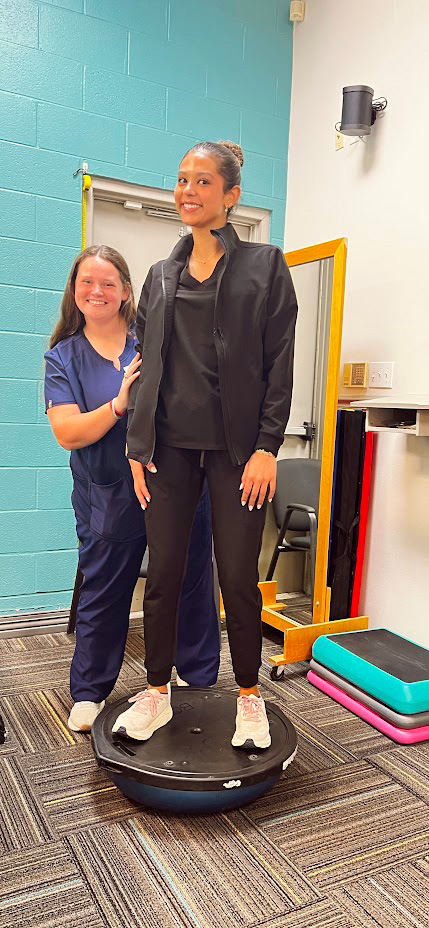
Bounce Back Strong with Physical Therapy
Don’t let pain dictate your life’s story. Reach out to Kleinpeter Physical Therapy to learn how physical therapy can be the first step towards a pain-free life!

Get a Head Start on New Year’s Resolutions
Who said you had to wait until January to make healthy changes? While December is a busy time of year, it also offers that glorious week between Christmas and New Year’s Day when work is slow (if not non-existent). Why not use that time to consider how you might incorporate new health routines in the new year?
You could…
- Incorporate a few minutes of jogging on your walks.
- Try out a fitness class you usually can’t take because of work.
- Perfect a few new healthy recipes.
- Experiment with meditation.
The post-holiday slump is also a great time to schedule an appointment with the team at Kleinpeter Physical Therapy. We can help you resolve any lingering pain or help you plan out a new exercise program–just in time for the new year.
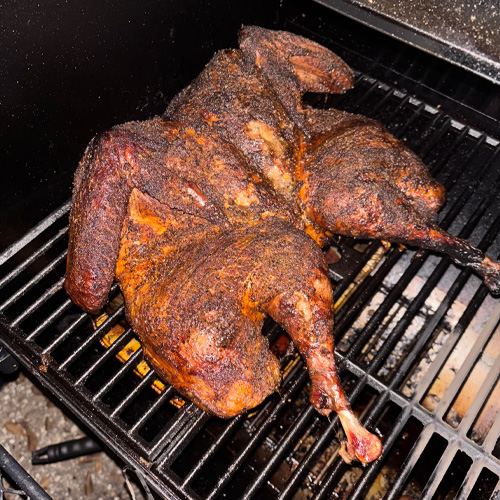
Enjoy this flavorful Concise Smoked Turkey recipe — a tender, smoky classic perfect for any holiday table. With simple steps and big taste, it’s a delicious way to impress your guests with minimal effort!
Enjoy This Healthy Recipe!
Conner’s Smoked Turkey Recipe (12–14 lb)
1. Prep (Day Before)
- Spatchcock the turkey.
- Dry brine with coarse salt overnight.
2. Injection (Day Of)
- Melt butter and mix with Worcestershire, salt, pepper, garlic powder, onion powder, paprika, and cayenne (ratios to taste).
- Inject thoroughly, especially in the breasts.
3. Seasoning
- Generously season both sides with coarse salt, coarse black pepper, garlic powder, onion powder, and paprika.
4. Smoking
- Smoke at 275°F for ~4 hours, or until:
- Breast: 155–160°F
- Thigh/Leg: 170–180°F
- Cover breast with foil if it begins to dry out.
- For crispier skin, raise smoker to ~300°F near the end.
5. Rest
- Rest uncovered for ~20 minutes before carving.
Notes
Pellet smokers may require a longer, slower cook for best tenderness.
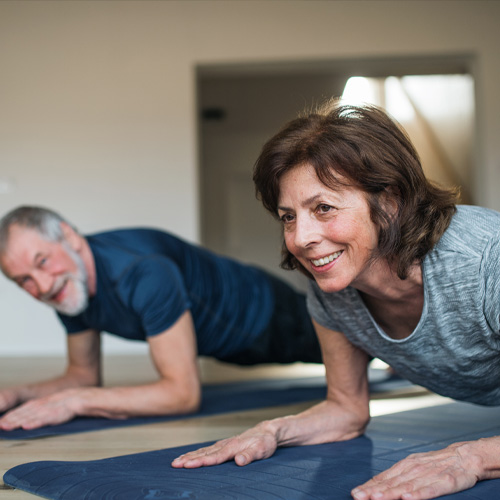
Help! Planking is Too Hard for Me!
If you’ve ever looked into strengthening your core, you’ve likely heard of planking. This deceptively difficult exercise involves holding your body in a straight line like a plank of wood. The most common version involves supporting yourself on your forearms and your toes.
It looks easy, but in reality, planking requires a tremendous amount of core strength while requiring you to use proper form–not letting your hips sag or stick too high up in the air, for example. And sometimes, someone might try a plank for the first time, only to discover that it’s nearly impossible for them to hold the position for 6 seconds, much less 60!
If that sounds familiar, don’t despair. You can build your core strength through plank variations.
If Planking is Too Hard, Try These Variations Instead
- Tabletop Plank: Performing a plank correctly requires activating your core muscles. This exercise helps you learn what that feels like. Position yourself on your hands and knees, your gaze on the floor, and your spine neutral. Practice engaging your core muscles–but don’t hold your breath.
- Bear Plank: Once you’ve got the hang of a tabletop plank, try a bear plank. Start in the same position as a tabletop plank. Then, tuck your toes, engage your core, and lift your knees about an inch off the ground. Hold for as long as you can, take a break, and then repeat.
- Incline Plank: Rather than resting your forearms on the floor, you can try a plank in which you rest your forearms on a bench or step. Arrange your forearms or palms on a sturdy, flat, elevated surface, then walk your feet back until your body forms a straight, diagonal line. Brace your core and hold for as long as you can.
Want more tips on improving your core strength? Make an appointment with Kleinpeter Physical Therapy today!
December Word Scramble
vegnreree
wannsmo
rewtah
ircfapeel
eslhgi
ilodyha
Answer Key
evergreen
snowman
wreath
fireplace
sleigh
holiday
Exercise of the Month
ONE LEG BALANCE
With your hands on the back of a chair, countertop, or wall, slowly lift your uninjured leg upward behind you so that your weight lies on the leg with the injured ankle. Hold this position for 20 to 30 seconds and gradually progress to more seconds as you get stronger.
2 Sets, 1 Rep. (Materials needed: chair)
Patient Success Story!
“Karl, Stacey, and the team at Kleinpeter were fantastic! Their focus and encouragement helped me get back on my feet! Great atmosphere of support!”
-Harold L.

Follow Us on Social Media!

Share Your Success Story
Love your experience with Kleinpeter Physical Therapy? Click the button to leave us a Google review—your feedback helps others find the care they need!
Thank You for Subscribing to Kleinpeter Physical Therapy
Refer a Friend

Our purpose at Kleinpeter Physical Therapy is to leave a greater impact on the community around us. In order to achieve our goal we want to change as many lives as possible as we become a beacon of positivity in our community.