
Upper Back Pain: Causes, Risks, and Long-Term Relief Options
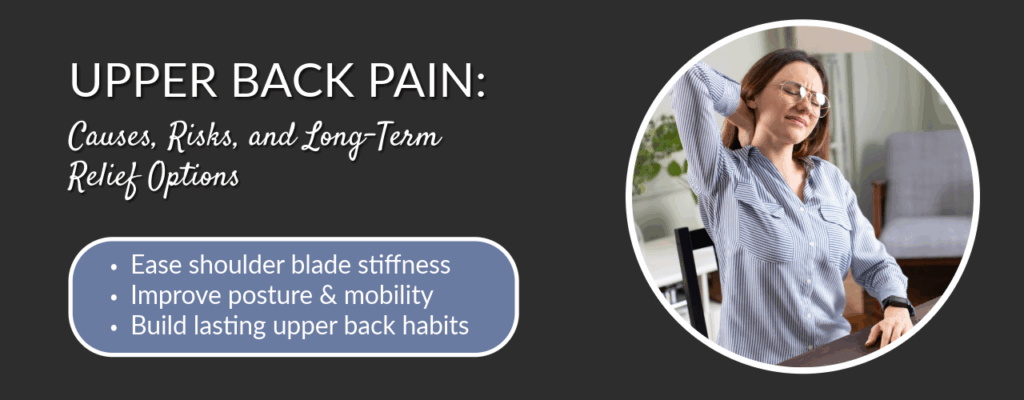

If you spend a lot of time at a desk, behind a steering wheel, or hunched over your phone, chances are you’ve felt some tension in your upper back. It might start as mild stiffness between the shoulder blades or a deep ache that builds throughout the day. For some people, it even leads to headaches or difficulty taking a full breath. If this sounds familiar, you’re not alone. Many patients seek upper back pain relief after dealing with symptoms that affect their work, movement, and overall well-being.
Let’s walk through what causes this kind of discomfort and how one patient, Michelle (not her real name), found lasting relief with the right support.
Michelle’s Story: From Desk Job Strain to Active Life
Michelle worked in customer service and spent long hours seated in front of two monitors. At first, the tightness in her upper back didn’t bother her much. But over time, the stiffness turned into nagging pain between her shoulder blades. She noticed it worsened when she sat for too long, and it became harder to focus or relax at the end of the day.
Michelle tried changing chairs, stretching in the evenings, and applying heat, but the relief never lasted. She began to worry that something more serious was going on or that the pain might be permanent. That’s when she reached out to Kleinpeter Physical Therapy for help.
Why Upper Back Pain Happens
Michelle’s story is common. The upper back, also called the thoracic spine, is built for stability and support. But it’s also affected by posture, breathing mechanics, shoulder positioning, and how often you move throughout the day. When muscles become overworked or joints are compressed, discomfort can build quietly over time.
Common causes of upper back pain include:
- Prolonged sitting or slouching
- Poor ergonomics at a desk or workstation
- Weakness in the upper back or shoulder blade muscles
- Stress-related muscle tension
- Limited mobility in the spine or rib cage
If left untreated, upper back pain can lead to other issues, such as:
- Stiffness that limits arm or neck movement
- Difficulty taking deep breaths
- Tension headaches or jaw pain
- Compensation in lower back or shoulder mechanics
How Kleinpeter Physical Therapy Helped Michelle Find Upper Back Pain Relief
Upper back pain relief is most effective when it targets the root cause rather than just masking symptoms. At Kleinpeter Physical Therapy, Michelle began with a full assessment to identify her movement habits, posture, strength imbalances, and how her body responded to different positions.
- Manual therapy to reduce stiffness and improve mobility in the thoracic spine
- Postural strengthening to engage her upper back and shoulder blade stabilizers
- Ergonomic education to modify her desk setup and support active sitting
- Breathing techniques to improve rib mobility and reduce tension
- Movement reminders to help her take short breaks throughout the day
After just a few sessions, Michelle began to feel more flexible and less tense. As her treatment progressed, she became more aware of how to carry herself and how to reset her posture before discomfort built up.
Lasting Relief Requires Ongoing Habits
Michelle’s progress didn’t happen overnight, but it lasted because she built new habits into her day. Even after finishing her in-clinic visits, she continued using the tools she learned in therapy.
Here are a few strategies she still uses today:
- Adjusts her monitor height and chair setup every few months
- Takes brief standing or walking breaks during long work sessions
- Performs upper back strengthening exercises a few times per week
- Incorporates gentle stretching at the end of each workday
- Uses focused breathing to reduce stress-related muscle tension
These small changes helped her stay comfortable and confident—without needing to rely on short-term fixes.
Ready to Feel the Difference Like Michelle Did?
Michelle’s success story shows that you don’t have to live with tightness, stiffness, or discomfort in your upper back. Whether your symptoms are mild or affecting your quality of life, there are solutions that go beyond stretching or hoping it gets better on its own.
At Kleinpeter Physical Therapy, our team helps you understand what’s causing your discomfort and creates a personalized plan for lasting upper back pain relief. If Michelle’s story sounds familiar, it might be the right time to take the first step toward feeling better.
Contact Kleinpeter Physical Therapy today to get started.